10 July 2025
Scaling for success: creating value through buy-and-build in mid-market infrastructure

In the mid-market infrastructure market, scaling a business into a fully functional institutional platform and capturing the associated scale premium are powerful drivers of value at exit. Among value-add approaches, buy-and-build can unlock significant growth. Over the past decade, InfraVia has consistently scaled platforms through a balanced combination of organic growth (CAPEX) and acquisition-led expansion (M&A). The investment teams have completed over 100 buy-and-build transactions, ranging from building platforms from scratch to accelerating existing small platforms through repetitive bolt-on acquisitions or pursuing strategic acquisitions that open up new markets or verticals.
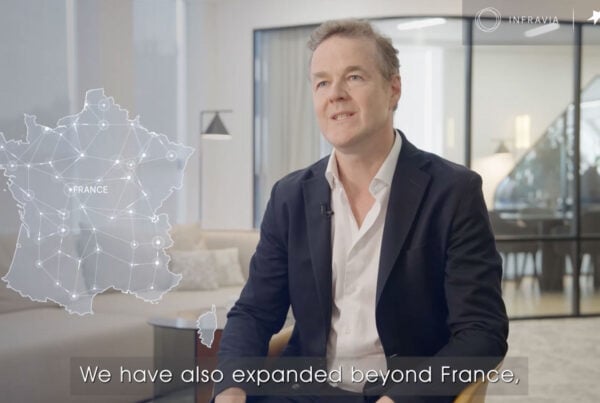
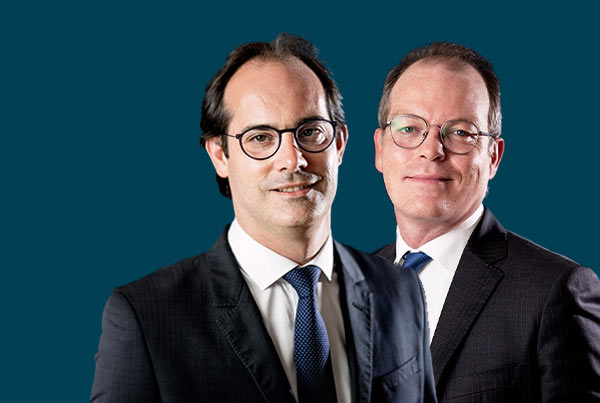
In this article, we spoke with Olivier Laroche, Partner, and Matthieu Cornu, Director, Asset Management, at InfraVia Capital Partners, about the various approaches to executing buy-and-build strategies to drive long-term value creation.
A STRONG FOCUS ON EXECUTION
Alongside its 25-person infrastructure investment team, InfraVia is supported
by a dedicated asset management team of 12 professionals bringing expertise
in strategic planning, M&A, operational performance, talent, digital transformation, and ESG. They work closely with portfolio companies’ management teams to execute and deliver growth plans effectively.
1-Building a platform from scratch
In certain infrastructure sectors, you’ve chosen to build platforms from scratch rather than acquiring established players. What drives this decision, and what advantages does this approach offer?
Olivier Laroche, Partner:
“Building a platform from scratch, by consolidating smaller assets into a larger, more competitive entity, can be a highly effective way to create accretive value. In certain sectors, acquiring an incumbent player may be prohibitively expensive or simply not feasible due to a lack of suitable targets. In those cases, starting from the ground up becomes a strategic entry point into high-potential markets, provided there is a clear path to establishing a credible, scalable platform that can compete with established players.”
Could you take us through a real-life example of building a platform from inception to exit?
Olivier Laroche:
“InfraVia has a strong track record of building new platforms from scratch. Let’s look at Alkion Terminals, launched in 2016 with a single facility in Amsterdam. In just five years, InfraVia transformed Alkion into a leading player in the Western European petrochemical storage market, expanding its footprint to 10 terminals across five countries. The company scaled from a team of 5 to more than 300 employees, successfully building a cohesive and integrated corporate platform. By 2022, Alkion had established itself as a key player in the European storage landscape, with a presence in the growing biofuel market, and was successfully sold to a strategic industrial buyer.”
What are the key levers for creating value starting from a single seed asset?
Olivier Laroche:
“Building a platform from scratch relies on several critical factors: a compelling market opportunity, selecting the right industrial partner, and securing a high-quality seed asset to anchor the platform. Turning an idea into a viable business and scaling it effectively requires a strong partnership with the management team. Momentum is essential. Within a limited time frame, you need to set up the core structure, kickstart the M&A and financing strategy, define the recruitment plan, build the brand, and set the foundation for digital transformation, etc. This kind of hands-on, operational playbook is something we are very used to dealing with. Finally, pricing is important. Acquiring a small seed asset may require paying a relative premium to gain initial market access. However, the true value creation comes from follow-on acquisitions and CAPEX investments. These are what drive dilution of the entry multiple on the one hand, and operational performance on top.”
2-Growing consolidation platforms – the M&A machine
Some sectors are currently undergoing historical consolidation phases. How do you leverage this opportunity?
Olivier Laroche:
“Absolutely, we are seeing an opportunity for strong and well-recognized franchises to emerge in markets that have traditionally been highly fragmented, particularly in social infrastructure sectors like leisure or healthcare. Several factors are driving this trend. One is demographics: many business owners are reaching retirement age and looking to exit. Another is the growing need for digital transformation, which requires substantial investment that smaller operators often cannot afford. By building consolidation platforms we can address these challenges: streamlining operations, achieving economies of scale and enabling the level of digital investment needed to modernize. This ultimately leads to better service offerings and an enhanced customer experience.”
Can you share examples where you’ve rapidly scaled a business while simultaneously enhancing the quality of service delivery?
Olivier Laroche:
“A perfect example is Sandaya, a leading outdoor accommodation operator in France. We invested in Sandaya in 2021, aiming to accelerate market consolidation, drive digital transformation, and premiumize the existing portfolio. In just four years, Sandaya has successfully doubled its campsite portfolio, completing five to ten acquisitions annually. It also expanded internationally, entering the Italian market and opening a new chapter of growth. Every newly acquired site is quickly integrated into Sandaya’s digital booking platform, upgraded to align with the group’s quality standards, and enhanced to deliver a consistent and high-quality customer experience.”
Matthieu Cornu, Asset Management Director:
“Univet is another strong example. It’s a leading veterinary care provider in France that InfraVia invested in in 2022. Between 2023 and 2024, nearly 70 veterinary clinics joined the Univet network. Through this integration, clinics gain access to shared resources, advanced digital tools, and ongoing professional development. This support enables veterinarians to focus on what matters most: providing high-quality care to animals.”
What does InfraVia’s asset management team do to operationalize and institutionalize a fast-growing platform?
Matthieu Cornu:
“Our first priority is to establish dedicated M&A capability within the platform. That starts with recruiting the right talents for sourcing and deal execution, and setting up a robust governance framework between InfraVia and the management team to review the acquisition pipeline, set-up priorities, and define the funding strategy. A key success factor is to design and implement a systematic M&A process that can efficiently absorb a high volume of transactions without disrupting day-to-day business operations. The same disciplined approach applies to post-merger integration. Newly acquired entities should quickly benefit from the group’s shared platform. Each department (finance, IT, operations, HR, procurement.) must ensure integration is embedded into day-to-day operations. Drawing from our extensive experience, we have developped a comprehensive integration playbook that helps companies to structure and accelerate the integration process.”
3-Strategic Buy-and-Build
What does a transformative buy-and-build strategy look like in practice?
Olivier Laroche:
“Strategic buy-and-build involves executing large-scale, transformative acquisitions to diversify into new verticals or geographies. An example of this approach is Celeste, a B2B fiber network operator in which InfraVia invested in 2019. Through eight strategic acquisitions in the telecom industry, including operators both domestically and internationally as well as adjacent service providers, InfraVia transformed Celeste into a unique one-stop-shop fiber and cloud operator in France and Switzerland.”
Matthieu Cornu:
“Another example is Blue Phoenix Group, in which InfraVia invested in 2022. Initially, the group specialized in treating and recycling bottom ashes from waste incineration. Having already completed two strategic acquisitions, the group has become a leading waste recycling infrastructure provider in Europe.”
What kind of approach do you take when defining a strategic diversification roadmap?
Matthieu Cornu:
“In strategic buy-and-build, clearly defining objectives is crucial. This means aligning early on the profile of the potential targets by defining a set of criteria, including strategic rationale, market segment, synergies, geographies, target size… This focus helps set the vision and direction of travel, maintain focus in the origination phase, avoid dispersion, and ensure consistency in communication with M&A advisors, sellers, and internal teams. Ultimately, it leads to more efficient and effective execution.”
How do you ensure you’re building an integrated group – and not just assembling a collection of stand-alone assets?
Matthieu Cornu:
“A tailored integration program is essential and starts by defining the target operating model for the group. The purpose is to ensure a consistent organizational design, standardized process and shared policies, and a clear definition of roles, responsibilities, and governance framework between headquarter and local business units. The integration program must cover the review of organization, processes and tools of all functions across the group. Building a robust financial reporting is also a top priority to be addressed very early on, as well as a reflection on the branding strategy.
Eventually, the goal is to create a cohesive group structure, aligned around a unified culture, rather than a loose collection of assets. This enhances scalability and market positioning, ultimately building a stronger equity story at exit.”
FOCUS ON TALENT MANAGEMENT
Dorothée Naud, Talent & Network Director, InfraVia
“Effective talent management and recruitment are essential to scaling a business successfully. It requires comprehensive and evolving HR expertise that develops alongside the company’s growth. From strategic hiring to continuous talent development, aligning leadership and workforce capabilities with the company’s evolving needs is key to building a scalable, sustainable talent framework throughout the investment lifecycle.
3 key areas to focus on include:
Target organization: When integrating multiple acquisitions, striking the right balance between centralized and decentralized functions is paramount. This requires a careful understanding of which roles should remain local to preserve agility and responsiveness, and which should be centralized to drive greater efficiency. Ultimately, it is about building robust organizations without losing agility.
Time management: Hiring C-suite executives is a time-intensive process that require foresight. Anticipating the company’s trajectory, particularly in terms of expansion and evolving needs, is critical to ensuring leadership gaps are addressed beforehand.
Culture: While technical expertise is essential, cultural fit is equally important and should not be overlooked. Soft skills – including adaptability, leadership, and alignment with the company’s ethos – often prove to be the distinguishing factor in a successful hire. Though frequently underestimated, these elements are crucial to fostering a cohesive and high-performing team.”
FOCUS ON DIGITALISATION
Vincent Grosgeorge, Digital & Technology Director, InfraVia
“Rapid platform scaling through multiple acquisitions – especially in a short timeframe – often triggers data and system complexities that affect operational efficiency, employee satisfaction, and management decision-making.
Transitioning to an institutional platform often demands a complete rethinking of the digital model to unlock significant efficiency and automation gains. Once the target core digital model is established, formalizing a standard convergence playbook is critical to accelerate integration: assessing the IT ecosystem of the target, identifying business-specific needs, pre-selecting potential partners, establishing governance network. Our team helps companies accelerate this transformation by leveraging previous transformation experience, strategic digital insights, top-tier experts, and a structured, repeatable approach that streamlines execution.
For example, Univet, one of France’s largest veterinary care providers, saw 70 different clinics join the group in a single year. Moving from individual doctors managing operations via Excel to a fully digital platform was a major challenge. To select two concrete impactful examples, we redesigned finance processes and tools to maximize automation, enabling the integration of those clinics without adding finance staff, and we built a robust and modern data infrastructure, providing vets with tailored dashboards and real-time insights to monitor care quality and steer operational activities. We achieved this transformation within a short time frame and in a pragmatic manner, focusing on practical, scalable solutions that delivered immediate value without overengineering.”
Conclusion
Buy-and-build remains a cornerstone of the value-add investor’s toolkit. However, the real value lies not just in buying and building, but in buying, building, and integrating. This approach requires tailored strategies, deep partnership with management teams, and relentless focus on execution. InfraVia has built the team, the infrastructure, and the experience to support entrepreneurs at every stage of the journey, whether it’s launching a platform from scratch, accelerating growth through multiple bolt-ons, or pursuing transformative M&A. With over a decade of experience and a long track record in scaling platforms, InfraVia has developed a proven and adaptable model across sectors, geographies, and business models. More than just investors, InfraVia acts as long-term partner, committed to helping businesses grow, evolve, and succeed in competitive and fast-moving markets.