2 September 2026
Outdoor hospitality – beyond the beaten track

The outdoor hospitality sector is growing faster and with greater resiliency than the wider tourism industry. It remains highly fragmented, providing a strong consolidation play for scaled operators. These dynamics combined with strong barriers to entry, resiliency across multiple economic cycles and attractive long-term growth make the sector an attractive destination for infrastructure investors.
Why do you believe outdoor hospitality is a particularly attractive segment today?
Olivier Laroche: Firstly, the European holiday campsite market is both large and growing, currently standing at €13 billion. In France, it’s outpaced both hotels and GDP for more than a decade, supported by macro trends such as demographics, affordability, value for money and growing demand for eco-friendly, local holidays.
Holiday campsites today represent more than 30 percent of leisure tourism overnight stays in France, and more than 20 percent in Italy and Spain. Premiumisation has also expanded the addressable customer base by attracting guests with higher net disposable income. In fact, the market for four- and five-star holiday campsites has grown almost twice as fast as the average campsite market.
Together, these dynamics are creating structural excess demand against constrained supply, underpinned by a scarcity of quality locations in premium destinations. This scarcity is being reinforced by national and local regulations, which is effectively creating a de-facto numerus clausus on the number of campsites that can operate.
As a result, operators such as Sandaya can achieve full occupancy in peak season, when more than 80 percent of annual revenues are generated. This concentration of demand in a highly predictable period provides strong revenue visibility and supports downside protection.
Finally, the segment benefits from an operating model naturally aligned with seasonal demand. With sites typically open from April to October, resources and services are scaled to match occupancy levels throughout the season. This creates operational flexibility and supports margin resilience in periods of disruption, as illustrated during the pandemic.
François Georges: I would add that the market is still highly fragmented in France, Italy and Spain. The majority of sites are still owned by small independent players. This presents a clear consolidation opportunity for a scaled operator like Sandaya. In fact, we’ve identified more than 1,500 actionable M&A targets across Europe, with the largest pool in France, Italy, Spain, Germany and the Netherlands.
What features of outdoor hospitality make it definitively infrastructure?
OL: One of the segment’s defining characteristics is its resilience through economic cycles. During the global financial crisis, the market still grew by around three percent, while between 2019 and 2025, amid inflationary pressures, it continued to outperform the broader industry. As holidays are increasingly seen as essential spend, outdoor hospitality has proved more resilient than many discretionary consumer categories. This pricing resilience is further reinforced by favourable supply-demand dynamics and the ongoing premiumisation of the offer.
Another important feature is that high-quality outdoor hospitality requires significant investment to acquire, develop and premiumise sites. This is precisely where we can bring value by supporting long-term capex programmes to improve asset quality.
How important is digitalisation as a value creation lever in this industry?
FG: It’s central to the model. Since inception, Sandaya has deployed an advanced IT platform to enable a direct sales model with full control over pricing, promotions and channel mix. Last year, we reached a key milestone by implementing a new reservation system which can scale to several hundreds of campsites. It’s a secure, fully integrated digital platform covering reservations, pricing, finance and on-campsite operations, enabling multi-country standardisation. Commercially it brings more sophisticated yield optimisation, including AI-driven features. Operationally, it also accelerates the onboarding of acquisitions, improves analytics capabilities for operations on site and on-park digital experience for customers.
OL: Digitalisation is crucially important as it can fundamentally transform an outdoor hospitality business from a collection of sites into a scalable platform. Looking ahead, we’re developing an AI roadmap to capture emerging commercial opportunities as travellers increasingly use AI tools to search for and compare holiday options.
What are the key determinants of success in this space?
FG: A key differentiator at the heart of our model is our direct-to-consumer model, with 90 to 95 percent of our turnover generated through direct sales, avoiding tour operators and aggregator websites. This gives us greater control over the customer relationship, from booking to on-site experience, while also preserving margin by reducing intermediation costs and generating valuable customer insights and data to support more targeted marketing, repeat bookings and revenue management. Beyond distribution, we also rely on strong operational capabilities to deliver organic growth and proven M&A capabilities to execute on bolt-on transactions at scale.
What are the challenges involved in that kind of buy and build strategy, particularly when expanding internationally, and how can these be overcome?
OL: A dedicated M&A team and a repeatable process have been central to Sandaya’s ability to acquire and integrate more than 70 sites over the past 15 years. The company has a robust due diligence process and has earned a strong reputation as a reliable buyer amongst independent owners, which is crucial when it comes to sourcing acquisitions. It’s also developed an effective integration playbook, allowing it to maximise synergies. This includes very fast brand rollout, distribution systems and site upgrades.
FG: Having completed so many acquisitions in France since our inception, we’re now bringing the same approach to other key target markets, namely Italy and Spain, which today represent more than 15 percent of our revenue. The Italian market, in particular, is extremely fragmented with around 2,300 campsites, 98 percent of which are still family owned and operated.
This is why we decided to open a local office in Florence in 2024. In a relationship-driven market, local presence is critical. You need local specialists that really understand the market.
What role does ESG play in this sector?
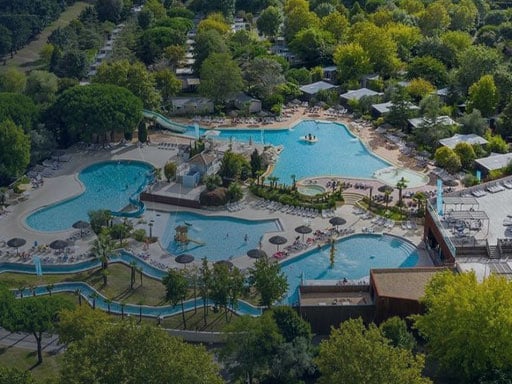
FG: We currently operate 70 campsites across more than 1,000 hectares of countryside. That natural environment is a core part of our value proposition – and a treasure we have a responsibility to protect. It’s a moral obligation in my view to be concerned about the future of our planet.
This is why ESG has been part of our DNA since inception, and today there are four pillars to our ESG approach. The first involves the optimisation of resources such as energy and water. The second involves the promotion of biodiversity and our impact on the natural world. The third pillar of our ESG strategy involves our employees, with a particular focus on seasonal employee retention. We employ more than 4,000 staff, many of whom are seasonal. Those employees are extremely important to our success because they’re the direct contact with clients. Ensuring their loyalty is critical because it increases the quality of our product. We go to great lengths to ensure these staff return year after year.
The final pillar involves developing the campsites of tomorrow based on the deployment of eco-friendly new accommodations and providing low-carbon travel with the installation of EV charging stations and on-site solar farms.
What does partnering with a fund really change?
FG: I can honestly say that I would never have been able to create this group without the equity firms that I have worked with over the years. Working with funds means I have to clearly articulate my strategy and justify key decisions, which creates real discipline. They challenge my thinking and push me to keep improving.
In practical terms, InfraVia has supported us on several fronts: they helped support a €250 million structured financing raise, provided expertise on digital and cybersecurity topics, and backed us in our acceleration in Italy, based on their knowledge of the country gained through several other portfolio companies.
OL: We’re first and foremost a financial partner, but we’re also a business partner that supports companies like Sandaya as they grow rapidly. That’s why, over the past ten years, we’ve developed an internal asset management team to work as sparring partners with our portfolio company management teams. Half of this team is now composed of specialists in digital transformation, cybersecurity, finance performance, talent management and ESG. We think that this is really important when it comes to helping boards make informed decisions on technical topics, and when it comes to de-risking the execution of critical projects.