5 May 2025
How waste recycling infrastructure can fuel the energy transition

With supportive regulations and increasing business demand for decarbonisation, waste recycling offers exciting investment opportunities, according to Vincent Menager of InfraVia and Paul Knight of Blue Phoenix Group.
Beyond renewables, the global energy transition is closely tied to industrial decarbonisation and emission reduction efforts, driving substantial investment needs in recycling infrastructure across Europe as industries seek sustainable, low-carbon solutions.
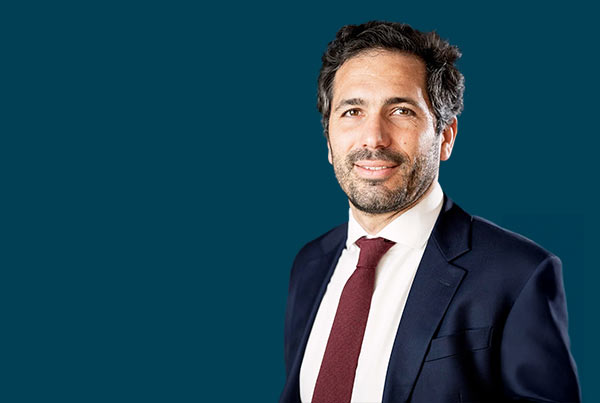
This presents a raft of new investment opportunities. InfraVia Capital Partners investment director Vincent Menager and Paul Knight, CEO at Blue Phoenix Group – an InfraVia portfolio company specialising in waste recycling – share their insight.
What is the significance of waste recycling in the broader energy transition theme?
Vincent Menager:
The energy transition goes far beyond just renewable energy. It can be addressed through various opportunities, including energy storage, energy efficiency and recycling. A portion of that means essentially decarbonising industries and minimising emissions, which drives significant investments in recycling infrastructure.
We have long been advocating that the energy transition is also about expanding the critical metals supply chain, as electrification of usage, as well as new renewable energy capacity, will require a generational step-up in metal demand. And we need to achieve that while limiting the carbon footprint of the industry as a whole.
That is what Blue Phoenix Group is doing. It extracts aluminium and copper from incinerated municipal and demolition waste.
For example, recycled steel can slash CO2 emissions by 58 percent, while recycling copper saves 65 percent and recycling aluminium saves as much as 92 percent. This makes recycled products much less carbon-intensive and aligns with the broader goals of the energy transition.
Recycling supports both the decarbonisation goals and resource efficiency. It is not just about reducing emissions, but also about creating a more circular economy, where materials are kept in use for as long as possible. This approach helps us meet environmental objectives more effectively while reducing the reliance on virgin materials.
From a technological perspective, how is the recycling of waste changing?
Paul Knight:
Technology is at the heart of driving efficiencies in the recycling sector. Innovation is powering the ability to enhance material quality and maximise the value of recycled materials.
The integration of AI has already reduced technology costs in the sector, with increased use of robotics and smart sensors. For example, we have recently implemented a fully robotic system in Denmark that efficiently separates individual waste streams, ensuring they are properly utilised.
The regulatory landscape is also driving the implementation of new technologies. Take the Netherlands, for example. New requirements were introduced so waste could be washed and certified. In response to that, we built a state-of-the-art-facility with the technology to accommodate this.
Vincent Menager:
From our perspective, as an investor in the sector, it is essential to continuously invest in upgrading infrastructure to ensure we maximise the value of recycled materials. The regulation framework is always in flux, so staying ahead with continuous investment in technology is key to maintaining a competitive edge.
How does this look in practice?
Paul Knight:
From our perspective, every year we process over nine million tonnes of material that would otherwise go to landfill. The material extracted can be split into three parts: ferrous metals, non-ferrous metals (aluminium and copper) and minerals, all of which can be placed directly back into the circular economy and can save CO2 emissions compared to using virgin sources.
Generating energy from waste (EfW) is quite interesting. An EfW facility burns waste material to turn water into high-powered steam, which then powers turbines and generates electricity for the grid. We take the remnants of that material, an ash or what we call IBA, and we process it into an aggregate from which we can extract ferrous and non-ferrous metals.
Another example is that of construction and demolition (C&D) waste, which accounts for over a third of all waste generated in the EU. The EU Waste Framework Directive is pushing for a dramatic increase in C&D recycling and there is a lot of potential here.
With the proper technology, C&D can be recycled into multiple products. For example, it can generate wood, which can be used either for recycled product or shredded as a fuel supply for biogas production. Or, in our Dutch facility, we turn the thermal treatment of tar road base into a fully reusable product, while also generating energy that is fed back into the grid.
What investment opportunities are being created in waste recycling?
Paul Knight:
The waste recycling sector is undergoing a significant transformation, driven by regulatory frameworks and growing demand from companies committed to sustainability. For example, to support the EU’s transition to a more circular economy, the EU Circular Economy Package has set ambitious targets, including recycling 65 percent of municipal waste by 2035 and limiting the share of municipal waste landfilled to 10 percent by the same year.
On top of that, businesses are increasingly under pressure to reduce their carbon footprints, which has led to a growing appetite for recycled materials. Companies striving to meet their “fit for 55” objectives by 2030 are driving demand for solutions that reduce their reliance on carbon-intensive resources.
Vincent Menager:
The convergence of supportive regulations and rising demand creates a compelling need for recycling solutions and services, presenting substantial investment opportunities. It is also a very fragmented market, presenting opportunities for consolidation.
Due to the capital-intensive nature of the industry, many businesses face challenges with limited access to funding. This situation allows companies like Blue Phoenix to pursue strategic acquisitions. It has already acquired a regional leader in the production of reusable raw materials for the asphalt and concrete industry in the Netherlands and a market leader in soil and C&D waste recycling in Denmark.
What we also appreciate about this market as infrastructure investors is the visibility of cashflow and protection against inflation due to contracts typically indexed to the CPI, which provide a stable annual revenue stream.
What is required to make recycling investment opportunities work?
Vincent Menager:
The first element to look at is the feedstock, as this is crucial in the business model of any recycling business. It is important to analyse the origin and the availability of feedstock.
Good quality local feedstock is valuable when you look at recycling businesses, as it is easier and more cost-effective to process. Additionally, feedstock labelled as waste is particularly advantageous, as it allows recycling companies to get paid for handling it.
Technology is also very important in the recycling industry. The expertise and technological knowledge required to efficiently and cost-effectively process and recycle material is a key differentiator.
While many companies are developing innovative technologies in this rapidly evolving market, we, as infrastructure investors, prefer to avoid taking on excessive technological risk. Our focus is on sustainable, proven solutions that offer reliable returns.
Scalability is also an important element to consider. While we have identified many promising businesses, not all have demonstrated that they can scale effectively to handle larger volumes of feedstock. For a recycling business to thrive long-term, it needs to prove its ability to grow and manage larger waste streams.
Lastly, market demand is a key consideration. It is key to understand the driving forces behind the demand for recycled products and how they are utilised by end customers. Establishing a reliable offtake network for the disposal of recycled materials is also a major differentiator.
Furthermore, it is essential to ensure that regulations supporting recycling are robust and properly enforced. Without strong regulatory enforcement, demand for recycled products could be undermined.
Paul Knight:
That last point is key. Competent regulations are crucial and they need to be used, so it is important that regulation is in place and enforced.
Looking ahead, what are the main challenges and opportunities in waste recycling?
Paul Knight:
From a business perspective, the challenges I see are around the cultural attitudes towards recycling and reusing materials. That is changing, but could be accelerated. On our side, we have been working very closely with regulatory authorities to understand their needs and requirements and share our expertise in this field from one country to another.
In terms of opportunities, we see significant potential for further development in Europe, as well as expansion to other geographies, such as Australia or the Middle East, where regulations are rapidly evolving.
We are very optimistic about the future. The demand for sustainable solutions is only growing, and with the right partnerships and commitment to innovation, we are well-positioned to drive positive change in the recycling industry globally.
Vincent Menager:
As mentioned earlier, we are seeing an increasing demand for recycled materials driven by regulation and net-zero objectives set by companies. Particularly, we have a strong conviction on the trend supporting the demand for more recycled metals, supporting the electrification and increase in renewable energy capacity.
As experienced mid-market investors with a proven track record in developing and scaling infrastructure businesses, we see significant opportunities for BPG to expand in response to the growing demand for infrastructure that supports the circular economy and energy transition.